The Vegas Buffet Paradox
What taste actually means in the age of AI, and why excellent features don't always make a great product.

Everyone in tech seems to be repeating the same line lately: taste is going to be the next big differentiator.
The argument goes something like this: AI is making software cheaper to build. As more people can turn an idea into a working prototype, the advantage shifts toward knowing what to build.
Sure, sounds good. But ask people what they mean by taste and the answers get vague in a hurry. It usually boils down to some version of having a "good eye," or "judgment," or "knowing what to build"... the old "you know it when you see it."
Which is fine, I suppose. But if taste is going to be what separates builders in the AI era, we should probably be able to explain what the hell it is.
I've used an analogy for years when talking about product development that I think helps. I call it The Vegas Buffet Paradox.
The Vegas Buffet Paradox
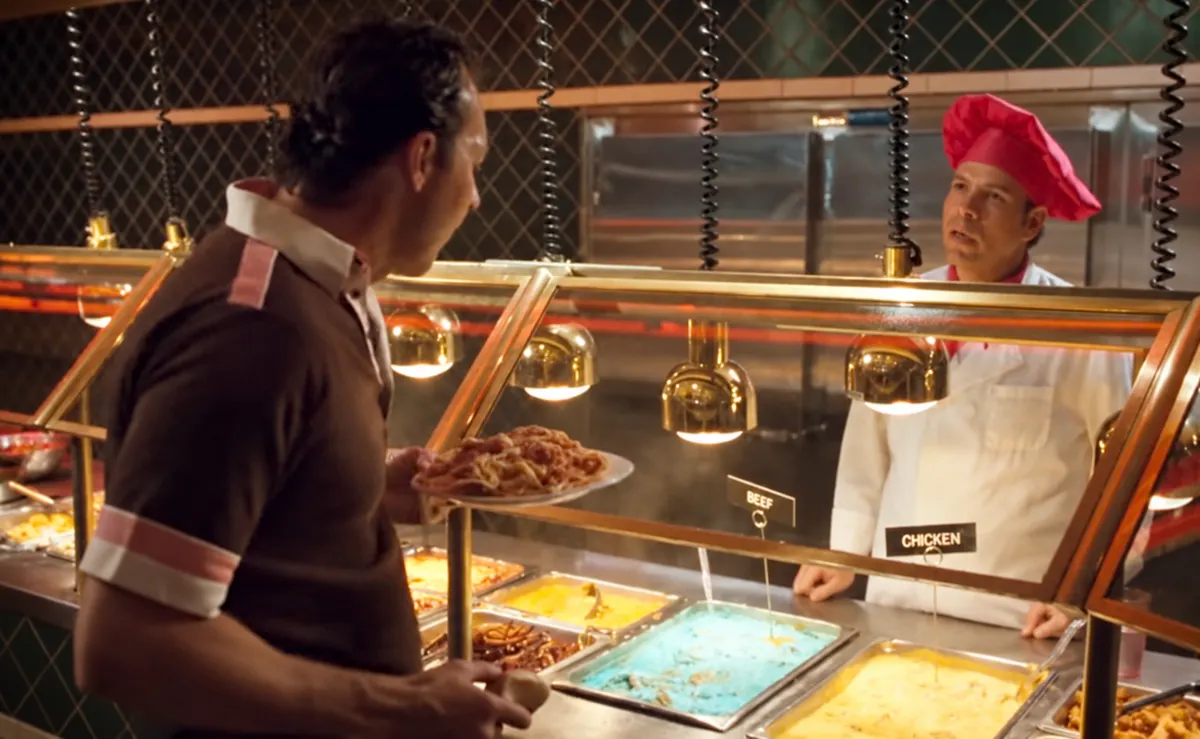
Picture one of those extravagant Las Vegas buffets: lobster, prime rib, sushi, caviar, pizza, chocolate cake. You've got a dozen different stations, each staffed by people who know what they're doing.
And let's say the food is excellent. The lobster is perfectly cooked, the steak is fantastic, and the sushi would make ol' Jiro cry.
Now take a little of everything and pile it onto the same plate without much thought about how it goes together... aaand now it's slop.
A buffet has its place. People want different foods, there's a lot to be said for letting them choose, and you can assemble a great meal from one. But handing customers access to everything, and serving up whatever they ask for, doesn't make for a sensible plate.
Now consider a Michelin-starred tasting menu. The ingredients might be of comparable quality, but there's a different philosophy behind the experience.
The chef has deliberately selected and sequenced the courses. You might start with something light and acidic before moving into richer flavors. Textures complement or contrast with one another; portions and pacing matter. What you've just eaten shapes how you experience what comes next.
And sometimes the chef leaves out a fantastic dish because it doesn't belong in this meal. The chef doesn't need better ingredients, or even better individual recipes. They need to understand how everything fits together.
That's what I mean by taste.
Why Good Features Make Bad Products
I've spent a lot of my career building products, and one principle I keep coming back to is what I call internal consistency.
Design systems, matching buttons, and consistent fonts matter, but I'm talking about the underlying philosophy of a product: the way it behaves, how it introduces complexity, how users move through it, and how each interaction builds on what they learned in the last one.
Think about how a typical product evolves. Someone sees a brilliant onboarding experience in one app. Another team finds an elegant navigation pattern somewhere else. A third discovers an engagement mechanic that's driving fantastic results for a competitor. Each is a great idea with a perfectly reasonable justification for adopting it.
Pretty soon you've got an onboarding experience that feels like a personal concierge, a dashboard that looks like the cockpit of a 747, and an AI chatbot that wants you to forget everything you just learned about how the product works.
Each component might be excellent. Put them together and you've got three different products fighting for the user's attention. It's the buffet plate.
We spend an enormous amount of time asking whether an individual feature is good, whether customers like it, or whether it moves some metric. We spend far less time asking whether it makes the product better, and those aren't the same question.
A great feature can make a product worse: it can introduce a competing mental model, interrupt an otherwise natural progression, or undermine expectations set elsewhere. The quality of the component hasn't changed; its relationship to everything around it has.
A great product is one where the features make sense together and reinforce one another toward a compelling narrative.
We've Organized Ourselves Around Buffet Stations
There's an organizational dimension to this, too. Many product organizations divide ownership across features, surfaces, and business outcomes: one team owns acquisition, another owns engagement, someone else owns monetization.
Each has its own roadmap, metrics, and definition of success. Each is incentivized to improve its part of the experience, and they might all be doing excellent work.
But who owns the meal? Who's accountable for the progression across those experiences? Who makes sure an improvement in one area doesn't make another feel worse, or that the product keeps a coherent philosophy as different teams contribute to it?
A design system helps, but it doesn't solve that problem. It's the equivalent of giving every buffet station the same plates and warmers; useful, but it won't turn the buffet into a tasting menu.
Someone needs a point of view about the whole experience, along with the authority to make tradeoffs in service of it. That doesn't mean routing every decision through one person. It does mean that when a feature helps one team hit its target but pulls the product in a different direction, someone can ask the team to change it, defer it, or leave it out.
That's an increasingly important part of product leadership. An organization can ship more, hit its individual targets, and still produce a worse experience if no one is accountable for how the pieces fit together.
AI Is Going to Make the Buffet Much Bigger
For most of software's history, building things has been expensive. Ideas had to compete for scarce engineering, design, and infrastructure capacity, and someone eventually had to decide what made the cut. Those constraints didn't magically produce good judgment (I've sat through enough roadmap reviews to know better), but they did put a practical limit on how many ideas made it into a product.
AI is changing that. Things that once took a team weeks to build can sometimes be prototyped in hours, and one person with the right tools can produce an extraordinary amount of working software.
A prototype is still a long way from a reliable product; testing, security, integration, and maintenance all take real work. But an easier first version does make it tempting to try more ideas. Why not add the clever interaction you saw somewhere else, another configuration option, or an AI assistant in a workflow that didn't need one?
Each addition is another thing for the user to understand, another decision to make, another interaction that has to fit into the experience. Your AI coding agent doesn't absorb any of that cost.
We've made it easier to put dishes on the buffet. We haven't gotten any better at composing the meal. As the constraints on building loosen, teams have to be far more deliberate about what they choose to add.
What Taste Actually Looks Like
Taste is having a point of view: the ability to recognize what belongs together, how it should fit, and what should be left out.
There's an element of selection, of course; you need to recognize what's good and what's worth pursuing. But the more interesting part is composition: understanding how the components relate to one another, whether they reinforce the same underlying philosophy, and how the experience progresses as someone moves through it.
A Michelin chef chooses the dishes, but the craft is in what happens between them. And they're going to hear complaints: too much meat, not enough seafood, and every other permutation thereof.
Restraint is the instantiation of the philosophy. It holds even when it flies in the face of what a customer, board member, or influencer asks for; even when the addition would clearly improve a metric and you have the capacity to build it tomorrow. If it pulls the experience in a different direction, the harder decision is to leave something excellent on the table because it doesn't belong.
Which is why I get skeptical when someone declares that taste is their competitive advantage but can't articulate the thinking behind their decisions. You don't have to agree with their choices, but they should be able to explain the philosophy, the tradeoffs, and how the pieces are supposed to fit together. Otherwise we're just calling personal preference taste.
Anyone can fill a plate at the buffet. Taste is knowing what to leave off it.
Read next
Design for the Ideal, Then Negotiate Reality
Most constraints were set when a person had to do the work. Don't design tomorrow's experience around them.
The 5Cs of effective product management "soft skills"
Learn the 5Cs of product management soft skills. This framework, inspired by Jake Sully from Avatar, outlines the core traits every PM needs to succeed.